How to Write the Perfect Resume
 By Vivian Giang and Melissa Stanger | Business Insider – Fri, Nov 30, 2012 10:30 AM EST
It takes recruiters an average of "six seconds before they make the initial 'fit or no fit' decision" on candidates based on resumes, according to research conducted by TheLadders. With this kind of competition, you need to have a flawless resume to get through the screening process.
We write a lot about resumes — what to do, what not to do — so now we're introducing a guide to crafting a curriculum vitae that will get you into the interview room. However, these rules are general advice we compiled from career experts. Everyone should tailor their own resume depending on the industry they're in and the position they're applying for.
Tailor your resume to the specific position you're applying for.
 elizabethdaniellephotos / statigr.amYou're basically selling yourself on that piece of paper, so mold the information to reflect what your potential employer is looking for in an ideal job candidate. This is different depending on your industry.
Miriam Salpeter advises in U.S.News & World Report that candidates should study the company's web site and "look for repeated words and phrases, taglines, and hints about their philosophical approaches."
Then, "mirror some of their language and values in your resume."
Put your name and contact info at the top.
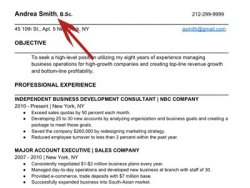 Business InsiderThis sounds simple, but Peter S. Herzog, author of the book "How To Prolong Your Job Search: A Humorous Guide to the Pitfalls of Resume Writing," says that applicants will try putting this important information on the side or bottom.
This is how it should be done:
1. Put your name in bold face and/or regular caps.
2. Include your full address and home, work (optional) and/or cell phone numbers and your email address but do not bold these.
Decide if you want to include an objective.
 Business InsiderWe've heard experts go both ways on this, so you need to decide for yourself if you want to include an objective.
Peri Hansen, a principal with a recruiting firm, tells Penelope Patsuris at Forbes that an objective is "the fastest way to pigeon-hole yourself" and if you "specify 'Asset Manager' you may not even be considered for 'Financial Planner.'"
On the other hand, Alex Douzet, CEO of TheLadders, tells us that everyone should include an objective and compare it to a "30-second elevator pitch" where you should "explain who you are and what you're looking for."
The bottom line is to only include an objective if it's not generic.
The length of your resume should reflect years of experience.
 j_margerison/statigr.amThis might be difficult if you've had a lot of experience and you're proud of all of it. But this doesn't mean it's necessarily relevant. Cut it down.
If you're in your twenties, your resume should only be one page — there's not enough experience to justify a second one, Alison Green writes in U.S.News & World Report.
However, if you've had more than 10 years of experience, you can add a second page, Douzet tells us.
Don't list your hobbies.
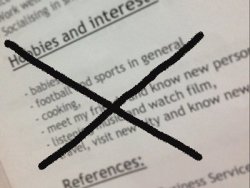 lorenjade_/statigr.amHiring managers only care about what you can do for the company, so if you can't connect your hobbies to the job you're applying for then leave them off your resume. If your extracurricular activities are relevant, you can include them at the bottom.
"I don't really care what kind of a person you are," Paul Ray Jr., CEO of recruiting firm Ray & Berndtson, tells Penelope Patsuris at Forbes. "I want to know what you can do for me."
Don't list your references.
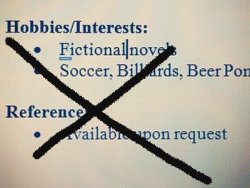 aggressivebull/statigr.amIf your prospective employer wants to speak to your references, they'll ask you. Also, it's better if you have a chance to tell your references ahead of time that a future employer might be calling.
Alison Green writes at U.S.News & World Report: "Unless the company has specifically asked for something other than a cover letter and resume, don't send it. Sometimes candidates include unsolicited writing samples, letters of recommendation, transcripts, and so forth. In most cases, sending these extras without being asked won't help you, and in some cases it can actually hurt."
Create your own CV template.
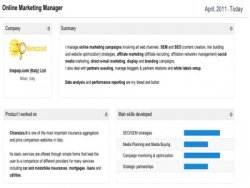 Simone Fortunini's resume. (Simone Fortunini)The pre-made resume templates offered on word processing programs like Microsoft Word just scream "template," Jacqui Barrett-Poindexter writes in Glassdoor. You can use those templates as a guide, but create your own final copy.
Furthermore, you should always stick to a format that's appropriate in your industry.
Simone Fortunini was an online marketing manager when he decided to create a resume in the form of an interactive web site resembling a Google Analytics page.
Fortunini tells us that since his work experience stems from online marketing and advertising campaigns, Google Analytics is a basic tool that those in his industry work with, and he wanted to create a resume illustrating his understanding in online marketing, graphic design abilities and HTML skills.
Use plenty of white space to draw the reader’s eye to specific items.
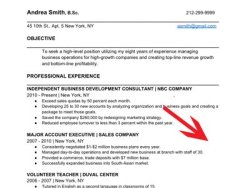 Business InsiderDon't include so much information that it gets distracting.
"Make it pleasing to the eye, and balanced with bullets, italics and bold font," Roxanne Peplow, career advisor at Computer Systems Institute, tells us. "Have your name stand out in bigger and bold letters ... bullet point your accomplishments. Too many words on a page are exhausting to read."
We write a lot about resumes — what to do, what not to do — so now we're introducing a guide to crafting a curriculum vitae that will get you into the interview room. However, these rules are general advice we compiled from career experts. Everyone should tailor their own resume depending on the industry they're in and the position they're applying for.
Tailor your resume to the specific position you're applying for.
elizabethdaniellephotos / statigr.amYou're basically selling yourself on that piece of paper, so mold the information to reflect what your potential employer is looking for in an ideal job candidate. This is different depending on your industry.Miriam Salpeter advises in U.S.News & World Report that candidates should study the company's web site and "look for repeated words and phrases, taglines, and hints about their philosophical approaches."
Then, "mirror some of their language and values in your resume."
Put your name and contact info at the top.
Business InsiderThis sounds simple, but Peter S. Herzog, author of the book "How To Prolong Your Job Search: A Humorous Guide to the Pitfalls of Resume Writing," says that applicants will try putting this important information on the side or bottom.This is how it should be done:
1. Put your name in bold face and/or regular caps.
2. Include your full address and home, work (optional) and/or cell phone numbers and your email address but do not bold these.
Decide if you want to include an objective.
Business InsiderWe've heard experts go both ways on this, so you need to decide for yourself if you want to include an objective.Peri Hansen, a principal with a recruiting firm, tells Penelope Patsuris at Forbes that an objective is "the fastest way to pigeon-hole yourself" and if you "specify 'Asset Manager' you may not even be considered for 'Financial Planner.'"
On the other hand, Alex Douzet, CEO of TheLadders, tells us that everyone should include an objective and compare it to a "30-second elevator pitch" where you should "explain who you are and what you're looking for."
The bottom line is to only include an objective if it's not generic.
The length of your resume should reflect years of experience.
j_margerison/statigr.amThis might be difficult if you've had a lot of experience and you're proud of all of it. But this doesn't mean it's necessarily relevant. Cut it down.If you're in your twenties, your resume should only be one page — there's not enough experience to justify a second one, Alison Green writes in U.S.News & World Report.
However, if you've had more than 10 years of experience, you can add a second page, Douzet tells us.
Don't list your hobbies.
lorenjade_/statigr.amHiring managers only care about what you can do for the company, so if you can't connect your hobbies to the job you're applying for then leave them off your resume. If your extracurricular activities are relevant, you can include them at the bottom."I don't really care what kind of a person you are," Paul Ray Jr., CEO of recruiting firm Ray & Berndtson, tells Penelope Patsuris at Forbes. "I want to know what you can do for me."
Don't list your references.
aggressivebull/statigr.amIf your prospective employer wants to speak to your references, they'll ask you. Also, it's better if you have a chance to tell your references ahead of time that a future employer might be calling.Alison Green writes at U.S.News & World Report: "Unless the company has specifically asked for something other than a cover letter and resume, don't send it. Sometimes candidates include unsolicited writing samples, letters of recommendation, transcripts, and so forth. In most cases, sending these extras without being asked won't help you, and in some cases it can actually hurt."
Create your own CV template.
Simone Fortunini's resume. (Simone Fortunini)The pre-made resume templates offered on word processing programs like Microsoft Word just scream "template," Jacqui Barrett-Poindexter writes in Glassdoor. You can use those templates as a guide, but create your own final copy.Furthermore, you should always stick to a format that's appropriate in your industry.
Simone Fortunini was an online marketing manager when he decided to create a resume in the form of an interactive web site resembling a Google Analytics page.
Fortunini tells us that since his work experience stems from online marketing and advertising campaigns, Google Analytics is a basic tool that those in his industry work with, and he wanted to create a resume illustrating his understanding in online marketing, graphic design abilities and HTML skills.
Use plenty of white space to draw the reader’s eye to specific items.
Business InsiderDon't include so much information that it gets distracting."Make it pleasing to the eye, and balanced with bullets, italics and bold font," Roxanne Peplow, career advisor at Computer Systems Institute, tells us. "Have your name stand out in bigger and bold letters ... bullet point your accomplishments. Too many words on a page are exhausting to read."
Use the right keywords.
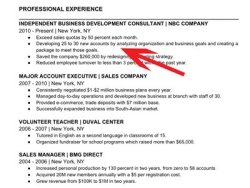 Business InsiderPeplow says that "you must put some of the keywords from the job posting into your resume, or it will probably never be seen by human eyes."
This is because a lot of companies use online recruitment tools to sift through resumes, writes Lauren Weber in The Wall Street Journal.
Barbara Safani of CareerSolvers suggests using LinkedIn's skills section to find the keywords that would most likely be used in a company's search query database. To do this, click on the "More" tab in your LinkedIn profile and enter a type of skill or description into the search box. This will result in a list of related skills popping up, which you can use as keywords on your resume.
Only include relevant work experience.
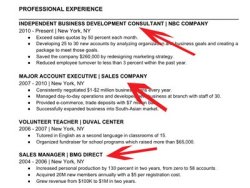 Business InsiderKeep your resume focused and don't include every single job you've ever had.
Eve Tahmincioglu at MSNBC writes: "In this economy, there’s a good chance a long-term job seeker has a part-time job (or jobs) under his or her belt just to make ends meet. But that doesn’t mean you should include every burger flipping, or retail-selling job you’ve had. Putting too many of those jobs on your resume, especially if they have nothing to do with the job you want, can hurt your chances of landing a new position."
“Resumes are a summary of the most important data,” Debra Feldman, a job search expert, tells Tahmincioglu. “In my opinion, a part-time job just to pay the bills would not fall into that category."
Peplow tells us that even if you have minimal work experience, this doesn’t mean that you have nothing to offer. Highlight your transferable skills, which are the ones that you can use from one job to the next — regardless of the position.
Use bullet points to list responsibilities and accomplishments.
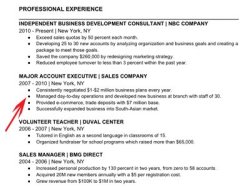 Business InsiderUnder each job or experience you've had, list your responsibilities and accomplishments in no more than three to five bullet points, writes Jasper Anson in AskMen.
And don't use full sentences.
Liz Wolgemuth at U.S.News & World Report writes: "[Compare] the process to flipping through a jumbo-size magazine. Readers don't spend a lot of time on each page. Full sentences are, quite simply, too time consuming in today's hiring world."
Put a number to your accomplishments.
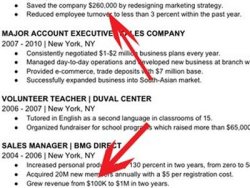 Business InsiderYour resume is for experience and accomplishments only. It's not the place for subjective traits, like "great leadership skills" or "creative innovator, says Alison Green in U.S.News & World Report.
You should always try to quantify your accomplishments.
Suzanne Lucas at CBS Moneywatch writes: "Some departments have 1 person, and some have 350. Quantify yours. "Managed a department of 12 analysts" is a lot stronger than "Managed a department." Did you have budget responsibilities? "Managed a $2.3 Million budget" is very different from "Managed a $75,000 budget." How many clients did you juggle? 1, 2, 25? Quantify."
If you can't put a number on what you've done, try linking the impact of your projects to the company's "point of sales." For example, if you were in charge of creating a marketing campaign on Facebook, show that you were able to reach the company's target market without having to spend the money that is usually spent on advertising.
"Basically, if you can't prove that you have sales, you can prove that you saved the company money by reducing marketing expenses," Roderick Lewis, international relations director, ISCTE Business School, University Institute of Lisbon, tells us.
Keep information about your education as short as possible.
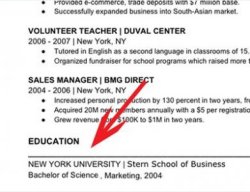 Business InsiderInclude only relevant education information: the name of your college, your degree, and the year you graduated.
Susan Adams writes in Forbes that experienced workers should include their education at the end of their resumes. If you're a new graduate, you should consider including a list of course work that's relevant to the position you're applying for.
And don't even think about listing your high school education and activities — unless you're under 20 and "have no education or training beyond high school," according to Tracy Burns-Martin's book "Before and After Resumes."
Use a chronological resume format.
 Business InsiderThe chronological resume — which is really reverse-chronological — is the format most often used. On the other hand, a functional resume doesn't include a chronological job history, but instead focuses on skills and abilities.
"Many hiring managers, me included, hate [functional resumes]," Alison Green writes in her blog "Ask A Manager." She says: "Generally, the first thing I think when I see them is, 'What is this candidate trying to hide?' That’s because people tend to use functional resumes when they’re trying to hide an employment gap, or job-hopping, or outdated skills (because it matters if your Web design experience is from 10 years ago or one year ago), or other things I’d rather know about. And if I do remain interested in the candidate, the first thing I’m going to do when I talk to them is ask them to walk me through their job history, with dates — and it’s going to annoy me that I have to, and if I have other good candidates I may not even bother."
If you've been unemployed for a while and you're afraid a chronological resume format will work against you, include any volunteer work you did during this gap and use it as an asset, writes Burns-Martin in her book.
Don't reveal everything.
The goal of the resume is to get you an interview with the company.
Therefore, you shouldn't reveal everything about yourself in the resume — just enough to get the hiring manager's attention, Peplow tells us.
Business InsiderPeplow says that "you must put some of the keywords from the job posting into your resume, or it will probably never be seen by human eyes."This is because a lot of companies use online recruitment tools to sift through resumes, writes Lauren Weber in The Wall Street Journal.
Barbara Safani of CareerSolvers suggests using LinkedIn's skills section to find the keywords that would most likely be used in a company's search query database. To do this, click on the "More" tab in your LinkedIn profile and enter a type of skill or description into the search box. This will result in a list of related skills popping up, which you can use as keywords on your resume.
Only include relevant work experience.
Business InsiderKeep your resume focused and don't include every single job you've ever had. Eve Tahmincioglu at MSNBC writes: "In this economy, there’s a good chance a long-term job seeker has a part-time job (or jobs) under his or her belt just to make ends meet. But that doesn’t mean you should include every burger flipping, or retail-selling job you’ve had. Putting too many of those jobs on your resume, especially if they have nothing to do with the job you want, can hurt your chances of landing a new position."
“Resumes are a summary of the most important data,” Debra Feldman, a job search expert, tells Tahmincioglu. “In my opinion, a part-time job just to pay the bills would not fall into that category."
Peplow tells us that even if you have minimal work experience, this doesn’t mean that you have nothing to offer. Highlight your transferable skills, which are the ones that you can use from one job to the next — regardless of the position.
Use bullet points to list responsibilities and accomplishments.
Business InsiderUnder each job or experience you've had, list your responsibilities and accomplishments in no more than three to five bullet points, writes Jasper Anson in AskMen.And don't use full sentences.
Liz Wolgemuth at U.S.News & World Report writes: "[Compare] the process to flipping through a jumbo-size magazine. Readers don't spend a lot of time on each page. Full sentences are, quite simply, too time consuming in today's hiring world."
Put a number to your accomplishments.
Business InsiderYour resume is for experience and accomplishments only. It's not the place for subjective traits, like "great leadership skills" or "creative innovator, says Alison Green in U.S.News & World Report.You should always try to quantify your accomplishments.
Suzanne Lucas at CBS Moneywatch writes: "Some departments have 1 person, and some have 350. Quantify yours. "Managed a department of 12 analysts" is a lot stronger than "Managed a department." Did you have budget responsibilities? "Managed a $2.3 Million budget" is very different from "Managed a $75,000 budget." How many clients did you juggle? 1, 2, 25? Quantify."
If you can't put a number on what you've done, try linking the impact of your projects to the company's "point of sales." For example, if you were in charge of creating a marketing campaign on Facebook, show that you were able to reach the company's target market without having to spend the money that is usually spent on advertising.
"Basically, if you can't prove that you have sales, you can prove that you saved the company money by reducing marketing expenses," Roderick Lewis, international relations director, ISCTE Business School, University Institute of Lisbon, tells us.
Keep information about your education as short as possible.
Business InsiderInclude only relevant education information: the name of your college, your degree, and the year you graduated. Susan Adams writes in Forbes that experienced workers should include their education at the end of their resumes. If you're a new graduate, you should consider including a list of course work that's relevant to the position you're applying for.
And don't even think about listing your high school education and activities — unless you're under 20 and "have no education or training beyond high school," according to Tracy Burns-Martin's book "Before and After Resumes."
Use a chronological resume format.
Business InsiderThe chronological resume — which is really reverse-chronological — is the format most often used. On the other hand, a functional resume doesn't include a chronological job history, but instead focuses on skills and abilities. "Many hiring managers, me included, hate [functional resumes]," Alison Green writes in her blog "Ask A Manager." She says: "Generally, the first thing I think when I see them is, 'What is this candidate trying to hide?' That’s because people tend to use functional resumes when they’re trying to hide an employment gap, or job-hopping, or outdated skills (because it matters if your Web design experience is from 10 years ago or one year ago), or other things I’d rather know about. And if I do remain interested in the candidate, the first thing I’m going to do when I talk to them is ask them to walk me through their job history, with dates — and it’s going to annoy me that I have to, and if I have other good candidates I may not even bother."
If you've been unemployed for a while and you're afraid a chronological resume format will work against you, include any volunteer work you did during this gap and use it as an asset, writes Burns-Martin in her book.
Don't reveal everything.
The goal of the resume is to get you an interview with the company.
Therefore, you shouldn't reveal everything about yourself in the resume — just enough to get the hiring manager's attention, Peplow tells us.